|
Case Report
Neurodegenerative lesion of tumefactive multiple sclerosis demonstrates the fluorescence radiation from 5-aminolevulinic acid-induced protoporphyrin IX
1 MD, Director, Department of Neurosurgery, Hokuto Hospital, Obihiro, Hokkaido, Japan
Address correspondence to:
Akira Tempaku
7-5, Inada-cho-kisen, Obihiro, Hokkaido 080-0833,
Japan
Message to Corresponding Author
Article ID: 100025N06AT2025
Access full text article on other devices

Access PDF of article on other devices

How to cite this article
Tempaku A. Neurodegenerative lesion of tumefactive multiple sclerosis demonstrates the fluorescence radiation from 5-aminolevulinic acid-induced protoporphyrin IX. Edorium J Neurol 2025;10(2):16–20.ABSTRACT
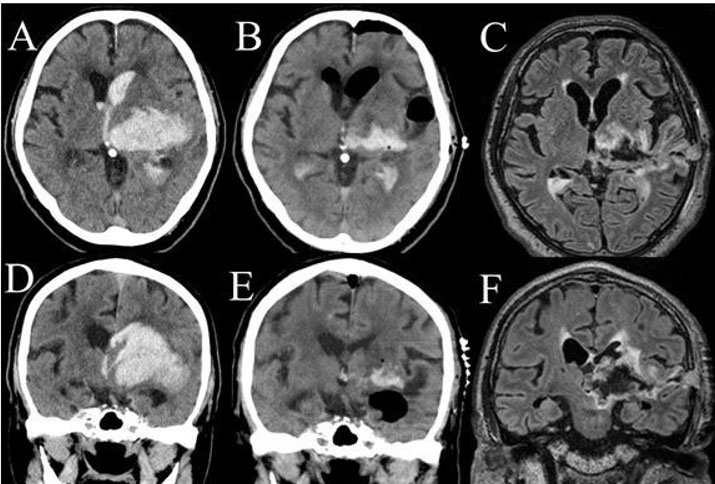
Tumefactive multiple sclerosis (tMS) reveals imaging findings in the central nervous system alongside extensive surrounding edematous changes. The nature and etiology of the disease are often unknown. In addition, differentiation from a primary intracranial tumor is often difficult based on imaging studies alone. Therefore, surgical resection and pathological examination are often required to obtain a definitive diagnosis. A 48-year-old woman attended the clinic complaining of headaches. A ring-shaped, contrast-enhanced lesion with perifocal edema in magnetic resonance imaging was noted in the right occipital lobe. She underwent craniotomy, and pathological examination revealed a diagnosis of tMS. Intracranial findings at the time of surgical operation showed excitatory light positivity for 5-aminolevulinic acid-induced protoporphyrin IX (PPIX). In tMS lesions, the author observed PPIX accumulation, indicative of mitochondrial dysfunction. It can be hypothesized that mitochondrial metabolic disturbance would result in inhibition of heme synthesis. The hypothesis that the decrease in adenosine triphosphate (ATP) production due to heme depletion is the underlying cause of the energy deficit is one that merits further investigation. This finding of mitochondrial dysfunction accompanied by the decrement of PPIX metabolization might be important for the etiologic analysis of tMS.
Keywords: 5-Aminolevulinic acid Fluorescence, Protoporphyrin IX, Tumefactive multiple sclerosis
SUPPORTING INFORMATION
Acknowledgments
The author thanks Dr. Eriko Aimono and Dr. Hiroshi Nishihara for their pathological studies and the medical staff of Hokuto Hospital for supporting clinical treatment and care for the patient.
Author ContributionsAkira Tempaku - Substantial contributions to conception and design, Acquisition of data, Analysis of data, Interpretation of data, Drafting the article, Revising it critically for important intellectual content, Final approval of the version to be published
Guaranter of SubmissionThe corresponding author is the guarantor of submission.
Source of SupportNone
Consent StatementWritten informed consent was obtained from the patient for publication of this article.
Data AvailabilityAll relevant data are within the paper and its Supporting Information files.
Conflict of InterestAuthor declares no conflict of interest.
Copyright© 2025 Akira Tempaku. This article is distributed under the terms of Creative Commons Attribution License which permits unrestricted use, distribution and reproduction in any medium provided the original author(s) and original publisher are properly credited. Please see the copyright policy on the journal website for more information.